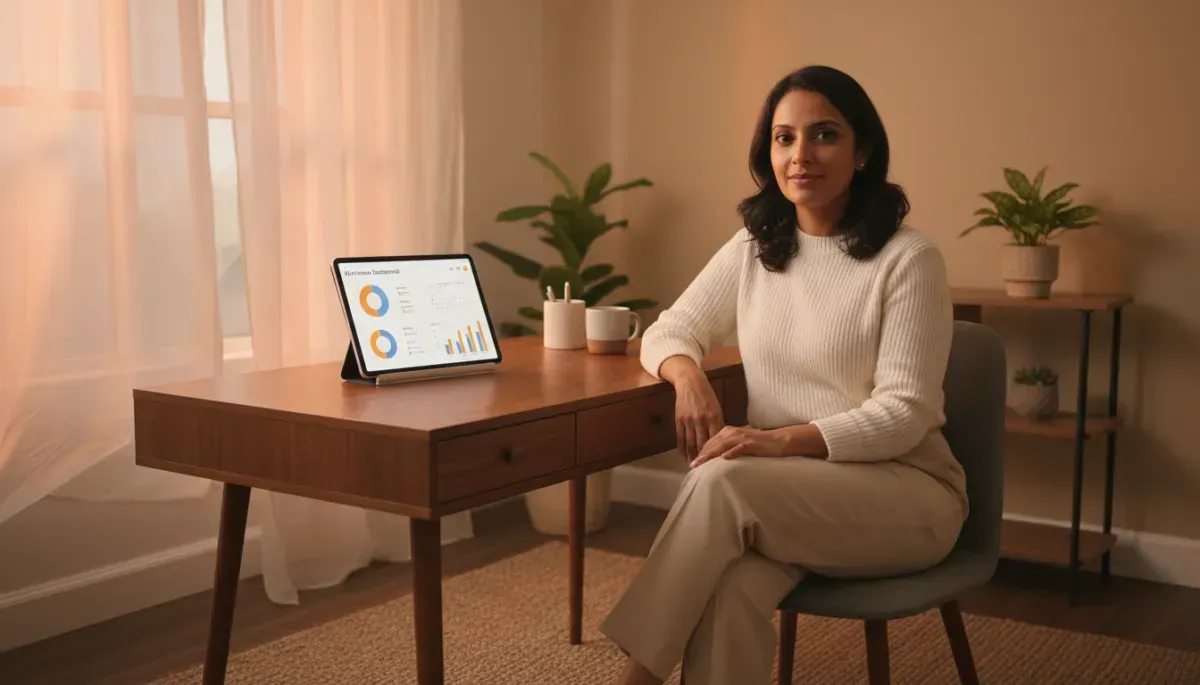
UK Firms Embrace All-in-One Business Dashboard
SMALL BUSINESS GROWTH, UK SMALL BUSINESS, DIGITAL SYSTEMS
Meta title: How UK Firms Use an All-in-One Business Dashboard | GoChuchuro
Meta description: Discover how an all-in-one business dashboard helps UK small businesses cut app chaos, reduce agency fees, and reclaim control in 2026.
URL slug: all-in-one-business-dashboard-uk
OG title: The All-in-One Business Dashboard Powering UK Small Firms
OG description: Learn how UK small businesses are replacing scattered apps and costly agencies with an all-in-one business dashboard for real control and growth.
OG url: https://gochuchuro.com/blog/all-in-one-business-dashboard-uk
How UK Small Businesses Use an All-in-One Business Dashboard to Take Back Control
How an all-in-one business dashboard helps UK small businesses cut scattered apps, reduce agency dependency, and regain control over growth in plain, simple steps.

The Late-Night Reality for UK Small Business Owners

It is 11 o'clock on a Tuesday night. Your restaurant, salon, or plumbing van has finally gone quiet. But your work has not stopped. Your laptop is open, your phone is buzzing, and your head is full of tabs — not just in your browser, but in your mind.
Ahmed, who runs a busy Nepali restaurant in Leicester, knows this feeling well. Service is full most evenings. His food is exceptional. His customers love him. Yet behind the kitchen door, he is juggling five different systems just to keep up with bookings, reviews, and cash flow.
One tab shows his booking calendar. Another holds his email marketing. A third is the customer database he updates when he remembers. A fourth manages his reviews. The fifth is his bank account, open because he is too anxious not to watch it. None of these tools talk to each other. Every update means more copying, more logging in, more late nights.
📌 Key Takeaway: Your hard work is not the problem. The problem is a scattered digital setup that quietly drains profit and energy every week.
The good news? The kind of all-in-one business dashboard that used to cost big corporations tens of thousands of pounds is now available to independent businesses across the UK. It brings bookings, leads, customer relationships, and cash flow into one clear view — so you can get your evenings back.
Why an All-in-One Business Dashboard Matters Right Now
A New Technology Playing Field for UK SMEs
Here is the reality of running a small business in 2026. The technology playing field has shifted permanently. Tools that once required a dedicated IT department are now available as simple subscriptions to independent tradespeople, restaurant owners, salon owners, and local clinics.
But most small businesses have built their digital setup one crisis at a time. A booking tool when the phone got too busy. An email platform when they wanted to send a newsletter. A separate CRM when they realised they were losing customer details. The result is a patchwork of systems that never quite fit together.
Fragmentation and the Cost of Scattered Apps
Excess software spending across UK businesses now exceeds £32 billion annually. And 73% of small business owners in the UK feel they are paying for overlapping features across multiple tools they barely use. That is real money leaving your account every month.
The problem is not a lack of technology. The problem is fragmentation. When your booking system, website, email platform, SMS, and CRM all live in different places, you end up paying twice, working twice, and still missing opportunities. A focused all-in-one business dashboard pulls these essentials into one simple control centre.
“The businesses that win in 2026 will not be the ones with the most apps. They will be the ones with the clearest systems.”
— Prakash Gurung MVO, Founder of GoChuchuro
The App Tower of Babel: When Your Tools Do Not Talk to Each Other

Real-time alerts from a unified dashboard stop valuable plumbing leads slipping through the cracks.
Most small business owners did not set out to build a chaotic digital stack. You started with one tool to solve one problem — then another, then another. Over time, the pile grew. Now you are logged into five or six different platforms every single day just to keep the lights on.
A booking calendar here. An email marketing tool there. A separate SMS service. A standalone website with its own form system. A customer database you update manually — if you remember at all. None of them share data properly. Every handover is a chance for a lead to go missing or a customer to feel ignored.
The Hidden Productivity Drain of Switching Between Apps
Research from the University of California found that it takes an average of 23 minutes to fully refocus after switching between tasks. If you are bouncing between six tools throughout the day, you are not losing minutes — you are losing hours of deep, focused work.
For a sole trader or small team, that is the equivalent of losing half a working day every single week. An all-in-one business dashboard removes most of that context switching by bringing your key information into one place — one login, one view, one source of truth.
💡 Pro Tip: Count how many times you copy and paste customer details between systems in a week. Every copy-paste is a system failure you can fix.
A Hampshire Plumber and a £300 Lead That Went Cold
Consider a plumber in Hampshire. A new lead comes through the website contact form. He copies it into his calendar manually. Later, he sends a follow-up from a separate email platform. He forgets to log the phone call in his CRM. By Friday, that lead — worth £300 or more — has gone cold.
The problem is not his workmanship. It is that his tools do not communicate. There is no integrated CRM or marketing automation inside a single dashboard to keep the process moving. With an all-in-one business dashboard, that lead would have been captured, followed up automatically, and booked in — even while he was under a sink on another job.
Fragmentation as a Growth Ceiling for UK SMEs
The British Chambers of Commerce's 2025 productivity report identified software fragmentation as one of the top five admin burdens holding back UK SME growth. It is not a side issue. It is a quiet ceiling on your growth, even if your diary looks full and your customers love your work.
When data is scattered, decision-making slows and opportunities are missed. A unified, all-in-one business dashboard is one of the most direct ways to remove that ceiling. When you can see leads, bookings, and revenue in one view, you can finally make confident decisions in minutes, not hours.
The "Agency Favours" Trap: Paying for Control You Do Not Have
When Help Quietly Turns into Dependency
Many small business owners reached a point where the tech felt overwhelming. So you did the sensible thing — you hired a local agency or freelancer to “handle it”. At first, it felt like progress. The website looked better. The social posts went out on time. Someone else was dealing with the tools.
But over time, something changed. Now, every time you want to update your service page, launch a promotion, or simply see how many new enquiries came in last month, you have to ask permission inside your own business. You are paying for help, but you have lost visibility and control.
High Monthly Fees, Low Transparency
In 2025, most UK SMEs paid between £1,250 and £3,500 per month for core marketing agency support. For an independent salon owner in Leeds, a mortgage broker in Manchester, or a Nepali restaurant in Birmingham, that is a serious monthly commitment — often with very little transparency over what is actually being done day to day.
This is not a blanket criticism of agencies. Many do excellent work. The issue is when the relationship creates dependency rather than capability. In that scenario, you are not investing in your business. You are renting access to it — and you are left in the dark without a clear dashboard of your own.
Why Visibility Matters More Than Vanity Metrics
When you rely on monthly reports you cannot verify, it becomes hard to link activity to real revenue. You might see graphs, impressions, and clicks — but not a clear line from “campaign launched” to “money in the bank”. A central all-in-one business dashboard changes that by showing leads generated, bookings confirmed, and invoices paid in one place.
With that visibility, you can still work with agencies — but on your terms. You own the system. You see the numbers in real time. You know exactly which activity is driving growth, and you can switch things off that are not working without waiting for next month’s report.
What Your Business Actually Needs: One All-in-One Business Dashboard
Three Engines Every Independent Business Must Run
Strip back all the noise and every independent business needs exactly three engines running in harmony. When these are unified in an all-in-one business dashboard, your digital tools finally start working together instead of pulling you in different directions.
Engine 1 — Marketing. Get found and attract leads. This includes your Google presence, social media, website forms, and review management. Every day your marketing is fragmented is a day your competitors are being found first when customers search on their phones.
Engine 2 — Sales. Capture and convert those leads instantly. This is your booking system, automated follow-up, and simple sales pipeline. The moment a prospect enquires, your business responds — even at 10 o'clock on a Wednesday night when you are nowhere near your phone.
Engine 3 — Retention (CRM). Keep your customers coming back. This is your CRM software, email and SMS communication, and interaction history. It turns a one-off booking into a loyal, repeat client who refers friends to your salon or restaurant without being asked.
From Enterprise-Only to Every High-Street Business
Historically, connecting these three engines required enterprise-level software and a corporate budget. Today, an all-in-one business dashboard puts all three in the palm of your hand — managed from a single interface, on any device, from anywhere you happen to be working.
Research consistently shows that businesses with unified systems see sales increase by 29%, team productivity rise by 34%, and sales forecast accuracy improve by 42%. These are not marginal improvements. They are business-changing numbers now available to independent businesses of every size — from barbershops to Gurkha training centres in Nepal.
The Scattered Subscription Tax: What Your Apps Are Really Costing You
The Visible Monthly Spend
When you add up the individual tools most small businesses pay for separately, the numbers are sobering. The average five-person UK service business now spends around £2,635 per year on software alone — roughly £44 per person per month, according to the UK Business Software Price Index by Whito.
Needed capability Typical monthly cost Reviews & SMS marketing £60–£120 Booking calendar £15–£30 Website hosting & forms £30–£50 CRM database & sales pipeline £50–£150 Email marketing platform £25–£60Total scattered spend£180–£410+ per month
The Invisible Cost of Fragmented Tools
And that is before you count the invisible cost — the hours spent logging into each platform, copying data between systems, chasing updates from your agency, and making decisions based on incomplete information because your numbers live in six different places.
The true cost of running six separate tools is not the £180–£410 in subscriptions. When you factor in context-switching time, data re-entry errors, integration failures, and missed insights, the real cost is closer to £400–£600 per month for a typical small UK business — most of it hidden, spread across your diary rather than on any single invoice.
Consolidation as a Strategic Investment
When you consolidate those tools into a single all-in-one business dashboard, you do not just save money. You reclaim your time, your data, and your commercial control — in one move. Instead of paying for five half-used tools, you invest in one system that runs your marketing, sales, and retention together.
With UK SMB IT spending forecast to reach US$74 billion in 2026 (Digital Origin), the businesses that get ahead will be those that invest in integrated, ROI-driven systems rather than an ever-growing list of disconnected apps. Consolidation is no longer just a tidy-up exercise. It is a strategic decision about how you want your business to run.
Hard Work Still Matters — But It Needs the Right System Behind It
Traditional Values, Modern Expectations
In many traditional communities across the UK — including the vibrant South Asian and Nepali business network that GoChuchuro is proud to serve — success has always been built on exceptional work ethic, face-to-face trust, and word-of-mouth reputation. Those values are powerful. They are the reason your customers keep coming back.
In an age of faceless digital transactions and automated everything, those human values are a real competitive advantage. But customer behaviour has shifted. People expect fast replies, online booking, and simple digital communication — even from the smallest local business. The right system lets you honour your traditional values while meeting modern expectations.
When Your Digital Front Door Is Locked
Picture a prospective client who finds your plumbing business on Google at 8 o'clock on a Sunday evening. They are ready to book right now. If your digital front door is locked — no instant response, no automated acknowledgement, no simple way to capture their details — they will move on to the next listing before your voicemail message finishes playing.
An all-in-one business dashboard keeps your digital front door open 24/7. Enquiries are captured, confirmations are sent, and follow-ups are scheduled automatically. You still deliver the same personal service — you just let the system handle the boring bits in the background.
Integration as a Profitability Driver
UK SMEs that have embraced digital integration report 60% efficiency gains, and 43% have seen a direct increase in profitability as a result. Their craft did not suddenly improve overnight. Their system did. The admin shrank. The follow-up became consistent. The owner could finally focus on the work only they can do.
The most successful independent business owners we work with are not the ones with the largest marketing budgets. They are the ones who built a reliable system once, centred on an all-in-one business dashboard, and let it run quietly in the background — day after day, week after week.
Three Steps to Breaking Free and Taking Back Control
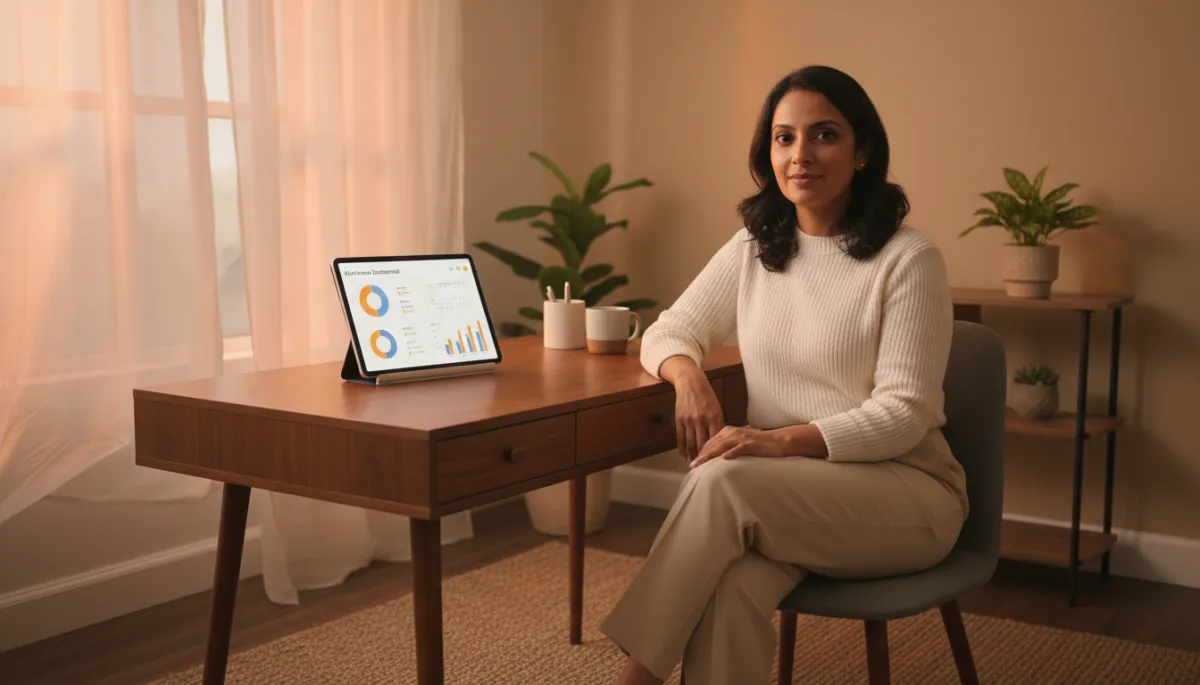
A single dashboard view lets UK business owners make confident decisions in minutes, not hours.
Step 1 — Audit Every Subscription
Reclaiming control does not require a complete technology overhaul overnight. It begins with an honest review of where your money is currently going — and what each subscription is genuinely delivering. This step alone can uncover hundreds of pounds a month in wasted spend.
Write down every digital tool you pay for and what specific problem it solves. Include “free” tools that cost you time. You will almost certainly find overlap, duplication, and tools you forgot you were even paying for. For most businesses, this audit is a revelation and the first step towards a leaner, smarter all-in-one business dashboard.
Step 2 — Identify Your Lead Leaks
Next, map the journey from first contact to paid invoice. Where are enquiries falling through the cracks — an unanswered phone at lunchtime, a website form that leads nowhere, or a follow-up that never gets sent because life gets in the way? Every leak is real revenue leaving your business every week.
An all-in-one business dashboard with integrated CRM software and marketing automation is designed to close these gaps systematically. New leads are captured instantly, tagged correctly, and followed up automatically — so your system works even when you are on a job, cooking in the kitchen, or cutting a client’s hair.
Step 3 — Unify Your Marketing, Sales, and Retention
This is where an integrated system earns its place immediately. When a customer books through your website, their details flow automatically into your CRM. A confirmation is sent, a reminder is scheduled, and a review request goes out after the job is done — all without you lifting a finger or logging into five different tools.
One of the biggest shifts in 2026 is the move from standalone tools to interconnected ecosystems — where marketing platforms sync with CRM, and operational data feeds into every decision. This integration-first approach is no longer reserved for large enterprises. It is the new baseline for any business serious about steady, sustainable growth.
The Bottom Line: Your Business Deserves to Work for You
You built your business on exceptional skill, genuine care for your customers, and years of hard work. You should not have to spend your evenings juggling logins, chasing agencies for a simple update, or making decisions in the dark because your data lives in six separate systems that never quite match up.
The technology exists today to give every independent UK business — from a Nepali restaurant in Leicester to a family-run plumbing firm in Hampshire or a salon in Birmingham — the same unified digital infrastructure that used to be reserved for corporations. One all-in-one business dashboard. One system. Total visibility. Total control.
2026 marks a genuine turning point. The tools available are more accessible and more integrated than ever before — while the cost of inaction continues to grow, especially as competitors adopt smarter, AI-enabled dashboards and integrated digital tools. The question is no longer whether you can afford a unified digital system. It is whether you can afford to keep going without one.
📌 Key Takeaways:Scattered apps drain your time, money, and focus; a single all-in-one business dashboard unifies your marketing, sales, and retention; and real visibility over leads, bookings, and cash flow is now available to every UK small business — not just big firms with IT teams.
When you bring everything into one clear view, you stop guessing and start managing by numbers. You cut duplicate subscriptions, plug the lead leaks, and finally build a system that supports your work ethic instead of fighting it. That is how independent UK businesses turn late-night admin into calm, predictable growth.
💬 Your Next Move: Take 20 minutes this week to look at your current tools and ask, “What would this look like if it all lived in one dashboard?” If the honest answer is “simpler and more profitable”, it is time to act.
Take the Next Step with a Free Business Digital Review
If you suspect your business is leaking money through scattered apps and hidden agency fees, you do not have to untangle it alone. A short, structured review is often the fastest route to measurable savings, calmer days, and a clearer growth plan built around an all-in-one business dashboard.
At GoChuchuro, we offer a 100% Free Business Digital Review — no obligation, no jargon, no hard sell. We sit down with you, map your current digital setup, identify every pound being wasted on fragmented tools, and show you a simpler, more profitable way forward using integrated systems that fit the way you actually work.
📞 Strong Call-to-Action: If you are ready to see what a unified dashboard could do for your restaurant, salon, clinic, or trade business, take the first step now. Book a free discovery call, bring your list of tools and questions, and we will walk you through exactly how to streamline, what you can safely cancel, and where the quickest wins are for your growth.
Book your free discovery call →
GoChuchuro | gochuchuro.com
Reach Your Peak. Automate Your Growth.
Book a free chat with us → card.gochuchuro.com
Blog Post Title: How UK Small Businesses Use an All-in-One Business Dashboard to Take Back Control
URL Slug: all-in-one-business-dashboard-uk
SEO / Meta Title: How UK Firms Use an All-in-One Business Dashboard | GoChuchuro
Meta Description: Discover how an all-in-one business dashboard helps UK small businesses cut app chaos, reduce agency fees, and reclaim control in 2026.
Focus Keyword: all-in-one business dashboard
Category: SMALL BUSINESS GROWTH
Tags: UK small business, all-in-one business dashboard, CRM software, marketing automation, agency costs, digital systems, GoChuchuro, productivity
Author Name: Prakash Gurung MVO
Author Bio: Founder of GoChuchuro. Certified Business Growth Coach and British Army veteran helping UK small businesses reach their peak through automation and smart systems.
Hero Image Alt Text: South Asian UK restaurant owner reviewing an all-in-one business dashboard on a tablet behind the counter.
Excerpt / Preview Text: Learn how an all-in-one business dashboard helps UK small businesses cut scattered apps, reduce agency fees, and finally take back control of their growth.
Reading Time: 7–8 minutes
Canonical URL: https://blog.gochuchuro.com/all-in-one-business-dashboard-uk
OG / Social Share Title: The All-in-One Business Dashboard Powering UK Small Firms
OG / Social Share Description: See how UK restaurants, salons, and tradespeople are replacing scattered apps and costly agencies with an all-in-one business dashboard for real control and growth.
Twitter / X Card Type: Summary with Large Image